Birdcage scaffolding is one of those terms that gets thrown around on site, but not everyone knows exactly what it means, or when it’s the right call. If you’re planning a project that involves working across a large open space (such as a church ceiling, a warehouse, or a grand hallway), a birdcage scaffold could be exactly what you need. At 7 Bays Scaffolding, we’ve erected birdcage structures across Cornwall for everything from listed building restorations to commercial fit-outs, and we’re here to help you understand whether it’s the right access solution for your job.
The Definition: What Is Birdcage Scaffolding?
Birdcage scaffolding is a freestanding scaffold structure built across a wide, open interior space to create a continuous working platform at height. Unlike standard scaffolding, which is typically erected against a wall or façade, a birdcage scaffold fills the entire footprint of a room or space, forming a grid-like structure that, from a distance, resembles the bars of a birdcage. That’s where the name comes from.
It’s most commonly used when workers need full, unobstructed access to a ceiling or roof structure over a large area. Rather than working from a series of separate lifts or moving platforms, a birdcage gives the whole team simultaneous access to the entire working surface – safely and efficiently.
How Does Birdcage Scaffolding Work?
The Key Components – Standards, Ledgers and Transoms
Like all scaffolding systems, a birdcage structure is built from three core components.
- Standards are the vertical tubes that run from the floor upwards and carry the load of the entire structure.
- Ledgers are the horizontal tubes that run lengthwise, connecting the standards at each lift height.
- Transoms run across the width of the scaffold, sit on top of the ledgers, and support the boards that form the working platform.
What makes a birdcage distinct is that it uses more than two rows of standards, running in a grid pattern across the full floor area, rather than the single or double row you’d see with façade scaffolding. This is what gives it its characteristic cage-like appearance and allows it to create a large, stable, fully boarded platform.
How a Birdcage Structure Is Assembled
The scaffold is built from the ground up, with standards positioned at regular intervals across the floor and connected by ledgers and transoms at each lift. The working platform is formed by laying scaffold boards across the transoms at the required working height. In some cases, sections of the deck can be left partially boarded for speed and economy, particularly useful where full coverage isn’t needed across the entire area. Once the platform is in place, the structure is checked, braced and signed off before any work begins.
How It’s Braced and Made Safe
Safety is non-negotiable with birdcage scaffolding. All birdcage structures must be adequately braced to resist lateral sway and horizontal loads, and standards must be braced to handle vertical loads. The scaffold also needs to be robust enough to prevent overturning or collapse. Where birdcage scaffolds are erected externally (or in exposed locations which are common here in Cornwall!), anchoring is essential to protect against wind loading.
All birdcage scaffolds erected by 7 Bays Scaffolding are built in accordance with TG20 guidance. Where the structure falls outside standard TG20 parameters, we commission an independent design from a qualified structural engineer to ensure everything is safe, compliant and fit for purpose.
Birdcage Scaffolding vs Other Types of Scaffolding
Birdcage vs Independent Tied Scaffolding
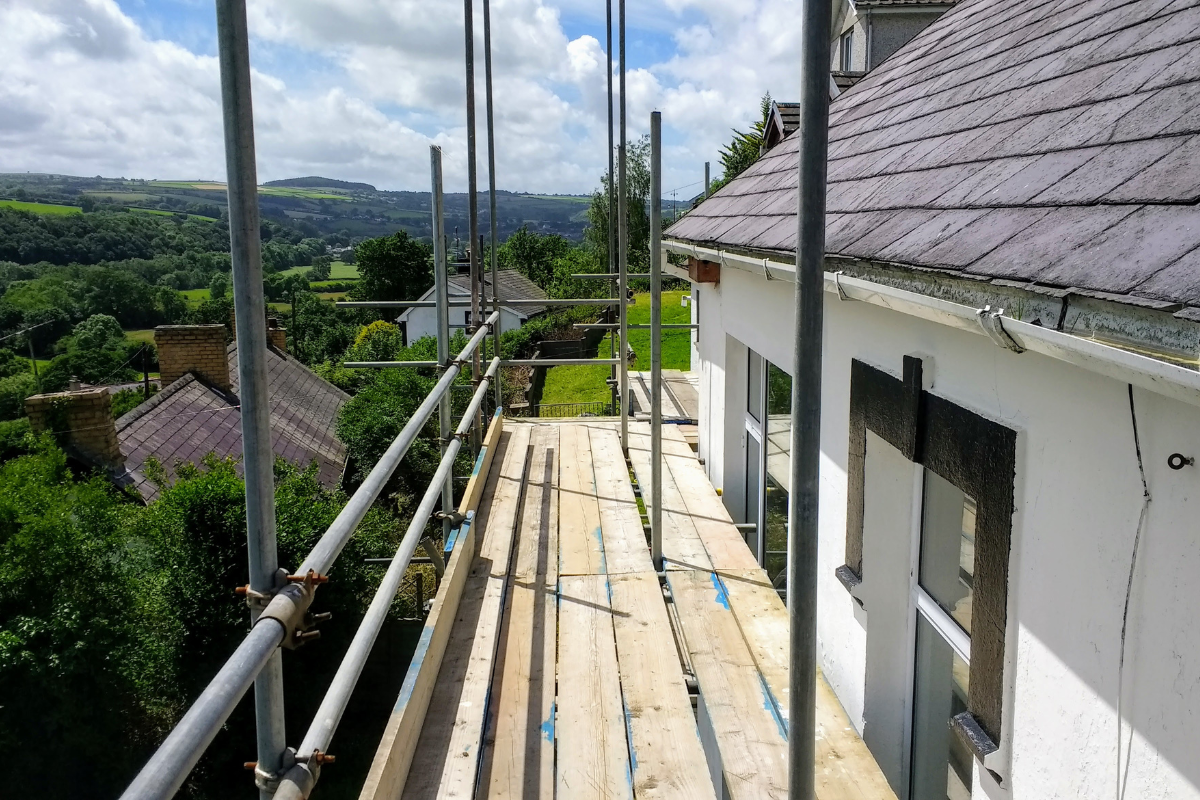
Independent tied scaffolding is the type of scaffolding most people picture when they think of scaffolding – erected against the outside of a building, tied back to the structure for stability. It’s designed to provide access to a vertical face, such as an external wall, roofline, or chimney. A birdcage scaffold, by contrast, is designed for horizontal access across a large ceiling or interior surface. If the work is happening on the outside of your building, independent scaffolding is almost certainly the right choice. If it’s happening overhead, across a large internal space, a birdcage is likely to be more appropriate.
Birdcage vs Mobile Tower Scaffolding
A mobile scaffold tower is a compact, wheeled unit that can be moved around a space to give access to different areas. It’s a practical solution for smaller jobs, replacing a light fitting, painting a high wall, or carrying out spot repairs. The limitation is that it provides access to only one small area at a time, making it inefficient and impractical for large-scale work. If you’re plastering a church ceiling or installing lighting rigs across a warehouse, constantly moving a tower scaffold isn’t safe or cost-effective. A birdcage gives the whole team a continuous platform to work from, significantly improving both safety and productivity.
When Birdcage Is the Better Choice
Birdcage scaffolding comes into its own when the working area is wide, the ceiling is high, and the project requires multiple workers to operate simultaneously across the full surface. If you’re dealing with a large internal space, a heritage structure with a delicate floor, or a project where safe simultaneous access is a priority, a birdcage scaffold will almost always be the most efficient and appropriate solution.
When Do You Need Birdcage Scaffolding?
Church and Chapel Restorations
Cornwall has a remarkable concentration of historic churches, chapels and heritage buildings, many of which require periodic restoration, repair and maintenance. Whether it’s repointing a vaulted stone ceiling, restoring decorative plasterwork, or replacing roof timbers, this kind of work demands safe, full-coverage access at height. Birdcage scaffolding is the standard solution for these projects, giving restoration teams the platform they need to work carefully and precisely without putting pressure on historic floor surfaces or delicate stonework below.
Warehouse and Industrial Ceilings
Commercial and industrial buildings often require maintenance work on pipework, lighting, ventilation systems or structural steelwork at ceiling level. The scale of these spaces makes traditional scaffolding impractical, and working from cherry pickers or mobile towers is often too slow and too risky for sustained work. A birdcage scaffold provides the full-coverage access these environments demand, allowing multiple trades to work across the space at the same time.
Large Domestic Hallways and Stairwells
You might not expect to see birdcage scaffolding in a domestic setting, but large hallways, entranceways and stairwells can present exactly the same access challenge as an industrial building. If you’re decorating a double-height entrance hall or installing a feature light fitting in a period property, a birdcage scaffold may well be the safest and most practical way to get the job done.
Listed Buildings and Heritage Projects
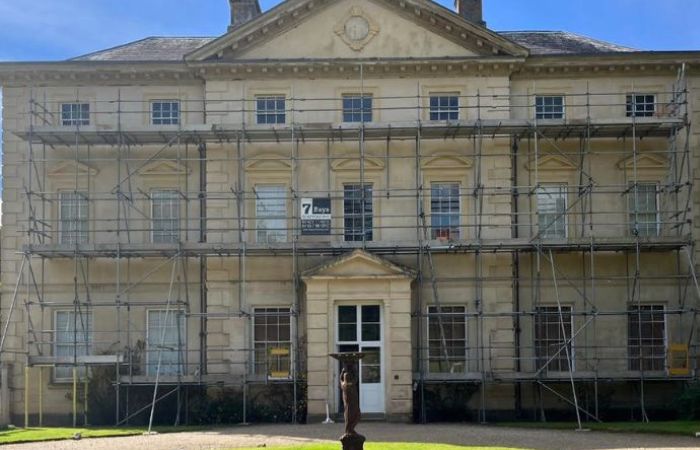
Working on a listed building comes with a specific set of challenges. Access needs to be provided without damaging the historic fabric; floors are often irreplaceable and can’t take point loads, and the building’s structure may rule out tying the scaffold to the walls in the usual way. Birdcage scaffolding, because it’s freestanding and distributes its load across a wide footprint, is well-suited to these environments. 7 Bays Scaffolding has experience working on listed and heritage buildings across Cornwall and understands the care and precision these projects require.
Birdcage Scaffolding Regulations and Safety Standards
All scaffolding in the UK is subject to the Work at Height Regulations 2005, which place a legal duty on employers and contractors to plan, supervise and carry out work at height safely. Birdcage scaffolds, given their scale and complexity, must be designed, erected and inspected by competent scaffolders with the appropriate qualifications and training.
At 7 Bays Scaffolding, our team holds CISRS Part 1 and Part 2 Advanced Scaffolder qualifications, City & Guilds Level 2 and Level 3 NVQs, and we are fully SSIP-certified via SMAS Worksafe. Every scaffold we erect is inspected before handover and at regular intervals throughout the project in line with current regulations. You’ll receive a scaffold handover certificate before any work begins, giving you complete peace of mind that your structure is safe and compliant.
How Much Does Birdcage Scaffolding Cost?
Birdcage scaffolding costs vary depending on several factors: the size of the space, the working height required, the complexity of the build, and how long the scaffold needs to be in place. Because birdcage structures use more materials than standard scaffolding and require more time to erect, they typically cost more than a straightforward façade scaffold, but for the right project, there’s no safer or more efficient alternative.
The best way to get an accurate cost estimate is to request a site visit and a free quote. We’ll come and assess the space, discuss what the project requires, and give you a clear, honest price with no hidden extras. We pride ourselves on being upfront about costs – it’s one of the things our clients tell us they value most.
Birdcage Scaffolding in Cornwall: How 7 Bays Can Help
Whether it’s a church restoration in Bodmin, a warehouse fit-out in Newquay, or a period property renovation in Padstow, if you’re planning a project that might require birdcage scaffolding, the 7 Bays Scaffolding team is here to help. We cover all of North Cornwall and beyond, and we bring years experience to every job we take on.
We’ll visit your site, talk you through the options, and make sure you get the right scaffold for your project – safely erected, properly braced, and ready when you need it. Get in touch today for your free, no-obligation quote.